

Tailbone pain, medically known as coccydynia, refers to pain in and around the coccyx — the small triangular bone at the base of the spine. It is often felt as a deep ache or sharp pain, particularly when sitting at your favourite waterfront café in Redcliffe, standing up from a chair, driving long stretches along the Bruce Highway, or even using the bathroom.
While coccyx pain accounts for only a small percentage of low back pain cases, it can have a significant impact on daily comfort and quality of life.
Coccydynia is more common in women (up to five times more likely than men) and may be linked to trauma, childbirth, posture, or pelvic floor dysfunction. An osteopathic approach looks beyond the tailbone itself to address contributing factors throughout the pelvis, spine, muscles, and nervous system.
What causes Coccyx (tailbone) pain?
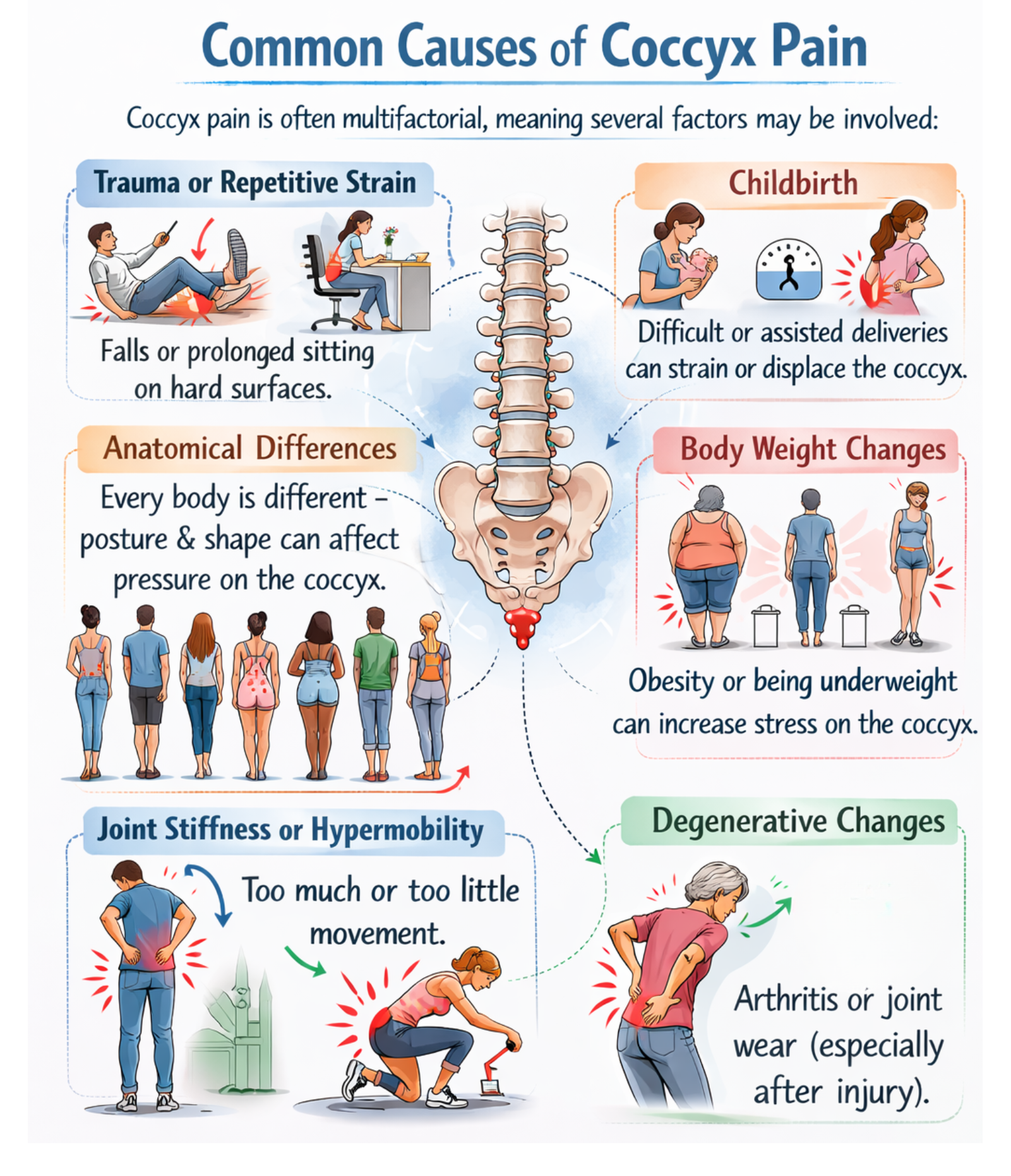
Coccyx pain is often multifactorial, meaning several factors may be involved:
In some cases, no single cause is identified, but there is usually a biomechanical or soft-tissue factor that can still be treated.
- Trauma or repetitive strain
Falls onto the tailbone are the most common cause. Prolonged sitting on hard surfaces can also create repeated micro-trauma. - Childbirth
Difficult or assisted deliveries can strain or displace the coccyx, leading to postpartum tailbone pain. - Anatomical differences
A coccyx that curves sharply forward or has a bone spur may be more prone to irritation when sitting. - Body weight changes
Both obesity and being underweight can increase coccyx stress — either through altered pelvic mechanics or reduced cushioning. - Joint stiffness or excessive movement
A coccyx that moves too much (hypermobility) or not enough (hypomobility) can both cause pain. - Degenerative changes
Arthritis or wear in the sacrococcygeal joints may contribute, particularly after injury.
In some cases, no single cause is identified, but there is usually a biomechanical or soft-tissue factor that can still be treated.
Why does Coccyx Mobility Matter?
Normally, the coccyx moves slightly when you sit and stand. Problems occur when this movement is abnormal:
- Hypermobility – the coccyx bends too much, often due to ligament laxity or injury
- Joint movement (never forceful)
- Hypomobility – the coccyx becomes stiff or “stuck,” often linked to joint degeneration or muscle tension
Osteopaths assess coccyx mobility through detailed physical examination and, when needed, imaging. Identifying whether the coccyx is too mobile or too rigid helps guide treatment.
Can my pelvic-floor issues cause tailbone pain?
Several pelvic floor muscles attach directly to the coccyx, meaning tailbone pain and pelvic floor dysfunction often occur together.
- Tight or overactive pelvic floor muscles can pull on the coccyx, restrict its movement, and contribute to pain
- Symptoms may include constipation, painful bowel movements, pelvic pain, or discomfort with sitting
- Coccyx pain may also develop after the pelvic floor tightens protectively following injury
Addressing pelvic floor tension is often key to resolving coccyx pain.
Can Osteopathy help with Coccyx/Tailbone Pain?
Osteopathic care takes a whole-body approach, addressing the coccyx as well as the spine, pelvis, muscles, and nervous system.
Treatment may include:
- Manual therapy to the coccyx, sacrum, and surrounding joints
- Soft tissue and myofascial release to pelvic, gluteal, and hip muscles
- Pelvic floor assessment and treatment when indicated
- Postural advice, activity modification, and home exercises
Internal Coccyx Manipulation
In some cases, internal coccyx manipulation may be appropriate. This gentle, specialist technique allows the osteopath to directly assess and improve coccyx alignment and mobility. It is always performed with informed consent and careful attention to comfort and privacy.
What can I do to help with tailbone pain?
Most patients benefit from simple strategies alongside treatment:
- Using a coccyx cushion to reduce pressure when sitting
- Improving sitting posture and taking regular movement breaks
- Temporarily modifying aggravating activities
- Using heat and short-term anti-inflammatories if appropriate
A Holistic, Pain-Informed Approach
Persistent coccyx pain can involve changes in how the nervous system processes pain. Osteopaths incorporate modern pain science, education, and reassurance to help reduce fear, restore confidence in movement, and support long-term recovery.
Treatment focuses on:
- Reducing pain and irritation
- Restoring normal movement and muscle balance
- Supporting pelvic and spinal stability
- Empowering you with tools to manage flare-ups
This can be especially helpful during periods of rapid growth, when the body is more vulnerable to strain.
What do I do about tailbone pain?
Coccyx pain can arise from injury, childbirth, joint stiffness or instability, pelvic floor dysfunction, or postural stress. An osteopathic approach addresses all contributing factors — not just the tailbone — to help relieve pain and restore comfort.
With the right assessment and a tailored treatment plan, most people experience significant improvement and can return to sitting, moving, and living comfortably again.
References
Blanco-Diaz, M., Ruiz Palacios, L., Martinez-Cerón, M. R., Perez-Dominguez, B., & Diaz-Mohedo, E. (2025). Physiotherapy approaches for coccydynia: evaluating effectiveness and clinical outcomes. BMC Musculoskeletal Disorders, 26, 514. https://doi.org/10.1186/s12891-025-08744-3
Garg, B., & Ahuja, K. (2021). Coccydynia – A comprehensive review on etiology, radiological features, and management options. Journal of Clinical Orthopaedics and Trauma, 12(1), 123–129. https://doi.org/10.1016/j.jcot.2020.09.025
Neville, C. E., Carrubba, A. R., Li, Z., Ma, Y., & Chen, A. H. (2022). Association of coccygodynia with pelvic floor symptoms in women with pelvic pain. PM&R, 14(11), 1351-1359. https://doi.org/10.1002/pmrj.12706
Scott, K. M., Fisher, L. W., Bernstein, I. H., & Bradley, M. H. (2017). The treatment of chronic coccydynia and postcoccygectomy pain with pelvic floor physical therapy. PM&R, 9(4), 367–376. https://doi.org/10.1016/j.pmrj.2016.08.007

Book an appointment today
At Northside Therapies, we are passionate about providing gentle and effective osteopathic care for babies and children. We aim to support your child’s healthy development by addressing structural imbalances early and promoting overall well-being. We believe in a whole-person approach, and work in partnership with you to ensure the best care for your child. If you have any questions or would like to book an appointment, please don’t hesitate to get in touch. We are located in Kallangur, on the Northside of Brisbane. We look forward to helping your family thrive.